- Stock: In Stock
- Brand: Tropica
- SKU: 20237
Venus flytrap - Spider / 10 seeds
(Dionaea muscipula)
A plant that bears the name of its prey - quite macabre!
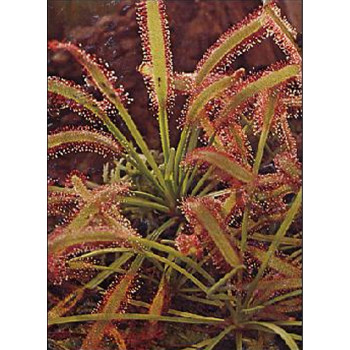
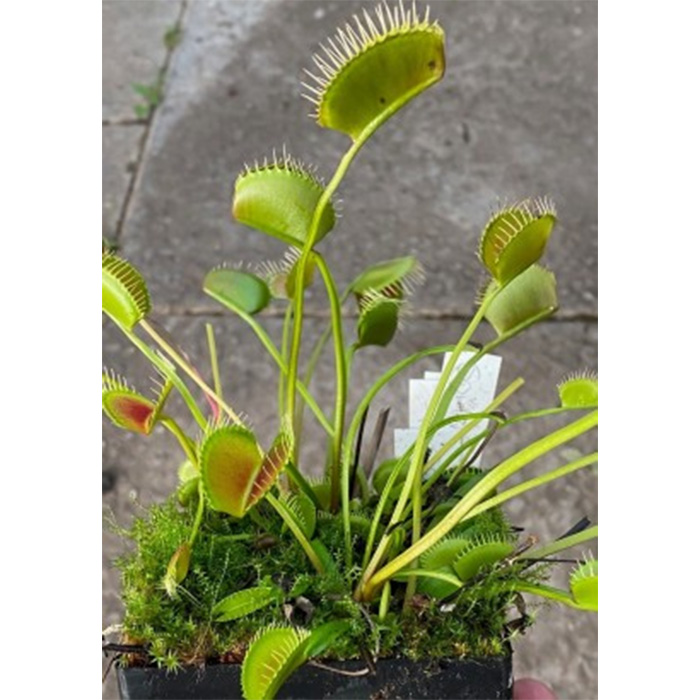
Interesting facts: Creepy! Giving an insect-catching plant the name of one of its victims is unusual - but that is true of many Dionaea varieties. However, it also owes its name "spider" to the fact that the leaf traps grow on very long and thin leaf stalks that are quite tangled up and therefore look spider-like. The position of the leaves is also special - at the end of the tall leaf stalks the folding traps grow completely upright and the teeth point straight ahead. This certainly makes the Venus flytrap not only look elegant but also "hungry" - UHAHHH!
The Venus flytrap is probably the best known of all carnivorous plants! The two halves of the leaf close quickly as soon as an insect gets into the trap. Soft insects are even crushed by the force of the traps. The Venus flytrap's prey is broken down by digestive enzymes and after a few days the trap opens again.
The Venus flytrap is native to the raised bogs of the American Atlantic coast of North Carolina.
The Venus flytrap loves a bright to sunny spot.
Only plant the plants in unfertilized peat and never water from above. The pot should be placed in a saucer that is always filled 1 to 3 cm high with low-lime water.
Never fertilize or only fertilize very rarely! The plant only needs fertilizer if it catches insects - these nutrients can be stored for up to a year.
After 4 to 5 "digestions" per trap, these turn black and can be removed by cutting them out. New traps grow back. In the long term, it is harmful to the traps to force them to close artificially (e.g. by touching them with your fingers).
Water a little less in winter, but do not let the soil dry out. It is best to place the pot in a light and cool place (4° to 12° C). It can happen that many of the traps turn brown and die. The plant does not die in this case, but goes into a kind of winter dormancy and sprouts again in April. Please continue watering even if no traps are visible.
The seeds can be grown indoors all year round. Scatter the fine seeds on well-moistened sowing substrate. The best germination is achieved at 23° to 28° C and takes place after 4 to 6 weeks.