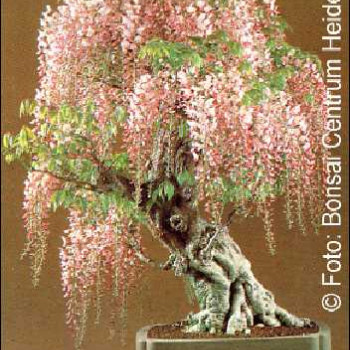
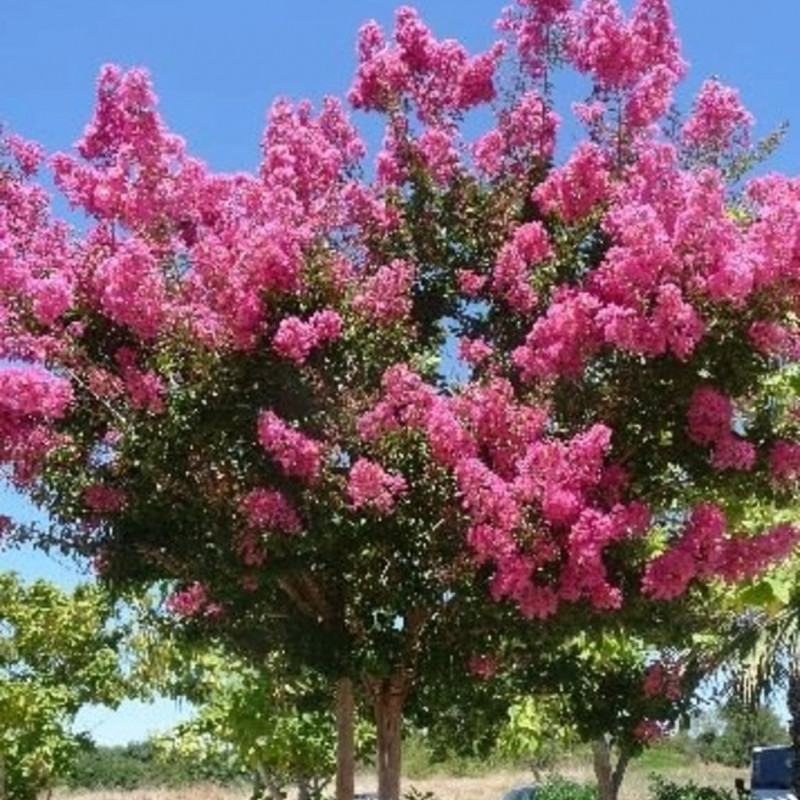
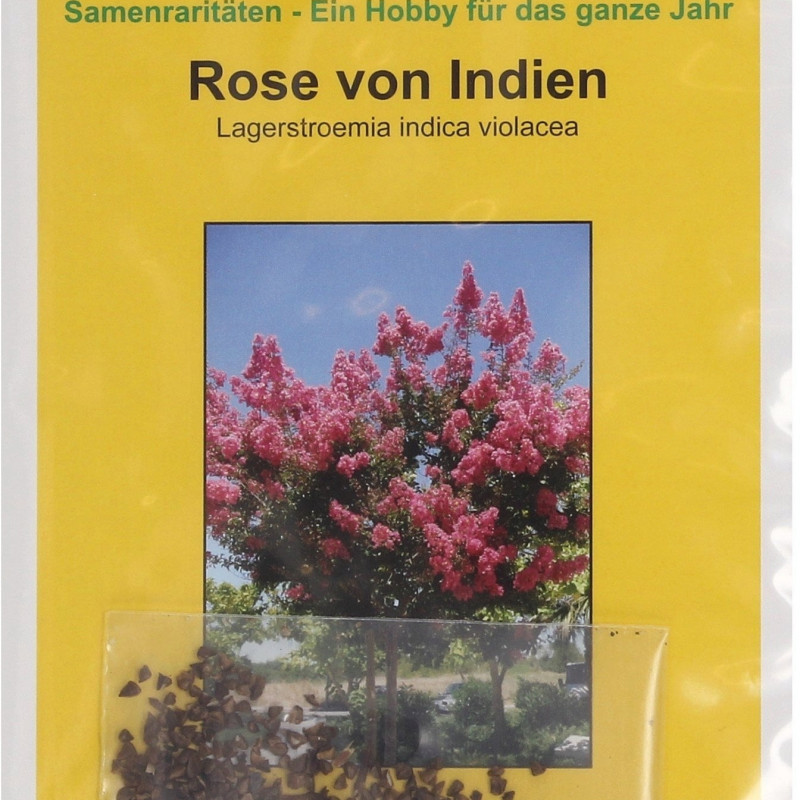
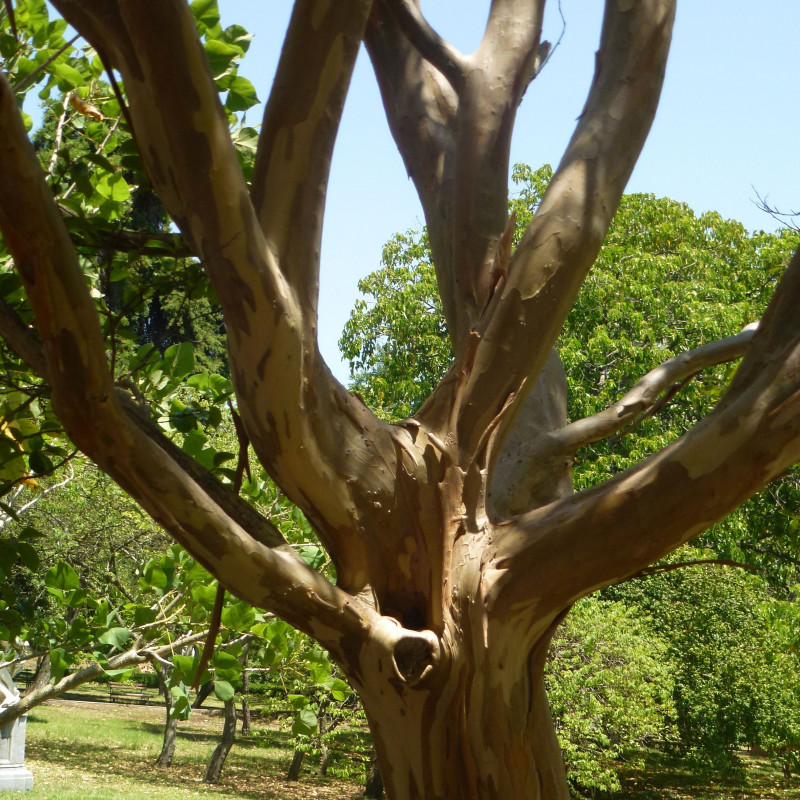
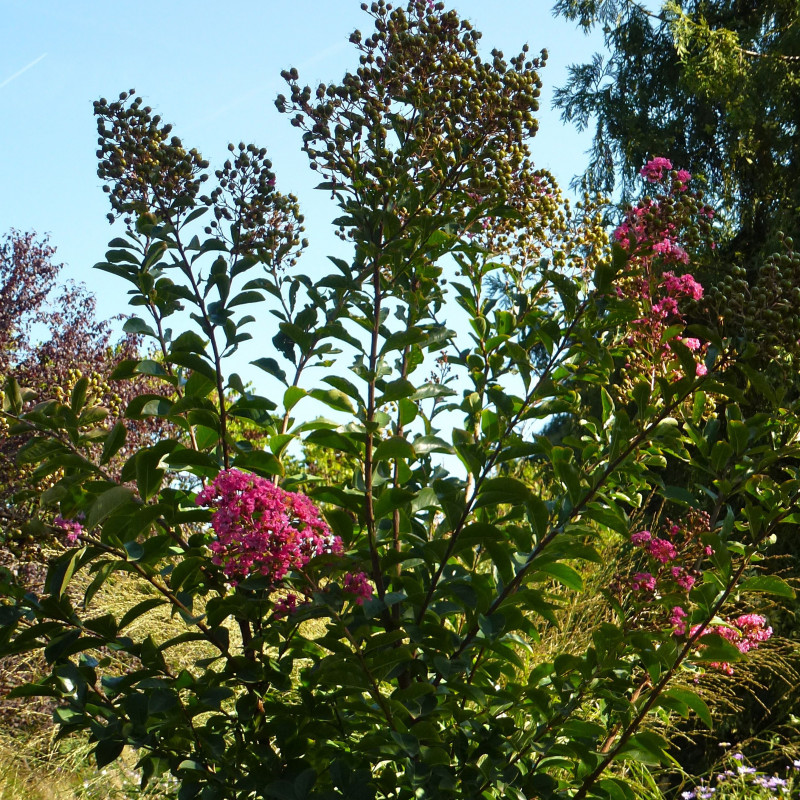
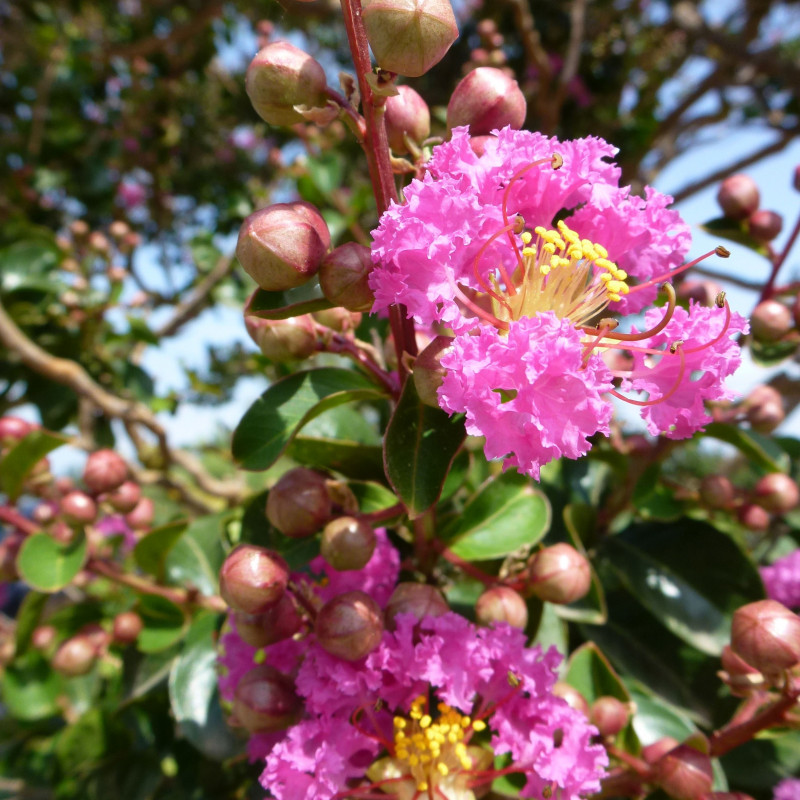
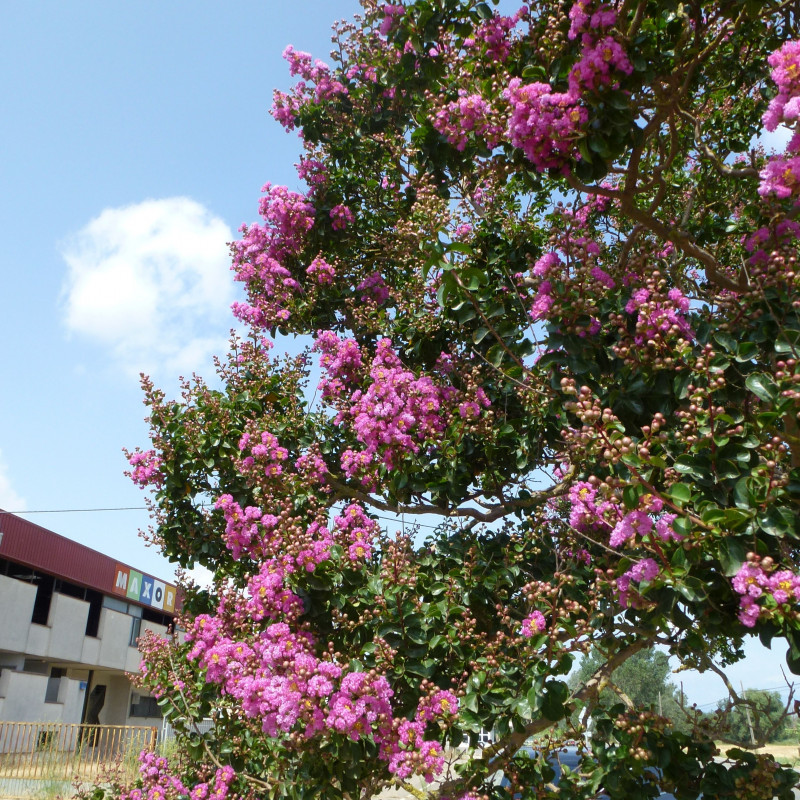
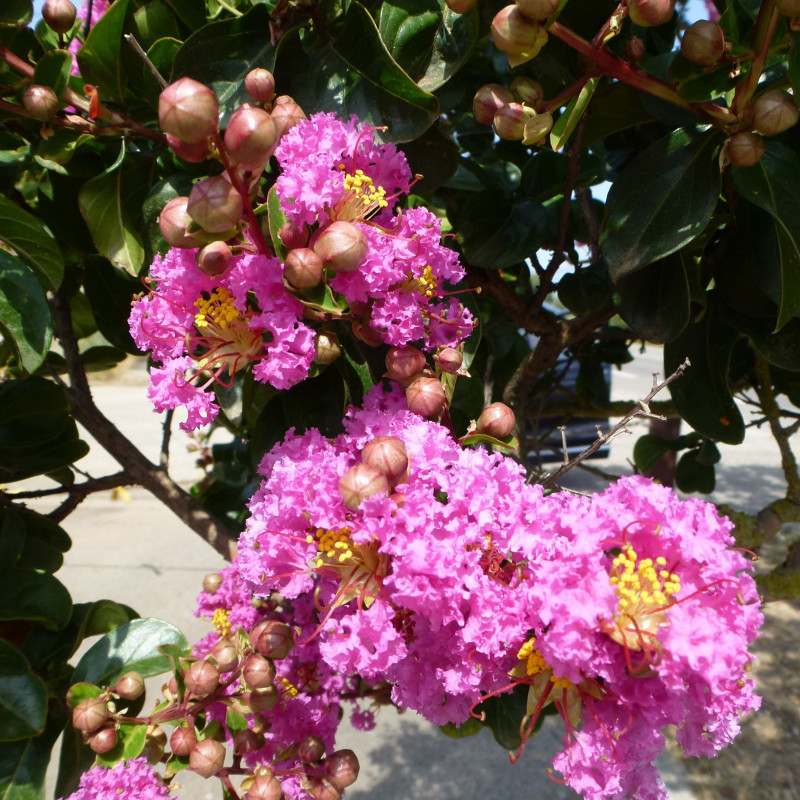







Interesting facts: This small, magnificent ornamental and park tree, up to 6 meters tall, is prized in Southern Europe, Northern Australia, and tropical America for its countless pink blossoms. These appear from June to September in almost 40 cm long inflorescences at the end of the branches. Despite its name, the plant does not originate from India, but from Central and East Asia. Its reddish and resilient wood is also popular. In our latitudes, the Rose of India is a fantastic container plant and easy to care for. It loves bright locations in summer, and even the young plants produce many flowers there. In northern Italy, promenade trees have survived temperatures as low as -12°C. Here are some of its many names: Indian crepe myrtle, Pride of India, Queen Flower, or simply Lagerstroemia.
Origin: Its original home is in China and Korea, from where it found its way to India.
Cultivation: The seeds germinate best at a soil temperature of 20°-24°C. Spread the seeds on moist growing medium, cover them thinly, and press down lightly. Keep slightly moist until germination.
Location: Lagerstroemia requires a lot of light. The brighter and sunnier the location, the more flowers will appear on the plant. Young plants should also be protected from strong winds.
Care: In summer, during bud and flower formation, the Rose of India requires abundant and consistent watering. Do not allow the root ball to dry out, otherwise the buds will fall off. From spring to fall, please fertilize once a week. Young plants branch out naturally. Pruning is usually not necessary. Only with older plants can you severely shorten the previous year's spent shoots. The flowers develop on the young wood.
Overwintering: A bright location with a temperature not below 15°C is ideal for the winter. Water sparingly during this time, but do not allow the root ball to dry out.